thomsloth.net

thomsloth.net











Emergency Supply List

Cast iron pot
Camping stove and fatwood
Assorted candles
Set of four sharp kitchen knives
Fabric ice chest on wheels (Amsouth gift)
Charcoal
Charcoal starting device (metal tube)
Home Depot bucket (for toilet)
Motorcycle helmets (2)
Small knapsack bugout bag
Freezer ice packs
Small rug
Ebola Bucket Contents:
	Bleach
	Sponges - 2
	Plastic drop cloth - 2
	Duct tape
	Assorted garbage/trash bags
	Protective glasses - 2
	Masks - 20
	Plastic gloves - 20
	Paracord
	Lysol wipes
	Gauze pads
Small knapsack contents:
	Emergency water pouches - 2
	Sunglasses
	Ballog Boo-boo bags - 2
	Earplugs
	Tiny camping toilet tissue tin
Emergency radio
Spork
Fire starting kit
Fabric mosquito head net
Bivy bag
Tarp
Rescue blanket
Dry sack containing:
	Money
	Survival blanket
	Information sheet
Safety syphon
Safety glasses - 2
Emergency radio - 2
Heavy gloves
Large candle
Paper napkins
Paper plates
Plastic spoons/forks
Hard knee protectors
Solar panel recharger
Paracord
Rope
Bungy cord
Tent stakes
Fire starting supplies
Small binoculars
Small pack of hygiene products including:
	Soap
	Tissue
	Chapstick
	Dental Floss
	Toilet paper
	Skin lotion
Long butane grill lighter
Hand crank lamp
Coleman propane grille
Another small knapsack/bugout bag
Dynamo and Solar radio
Water purification devices
Pet food
Masks - 20
Assorted plastic bags, various sizes
Battery powered lamp
Three day emergency food kit
Small blanket
Coffee filters - 1000
Oil lamp
Small tin pans - 5
Lamp oil
Kerosene lamp
Aluminum foil - 75 ft
Liquid hand soap (Dial - 65oz)
First aid kit - 2
Plastic plates - 4
Grilling tools
Plastic cups - 15
Can opener
Poncho
Cooking pots/pans
Disinfectant wipes - pack of 80
Large bugout bag with assorted contents (not inventories)
Sloth Factoid 3: Physiologically, sloths are heterothermic, that is, they have imperfect control over their body temperature. Normally ranging between 25 and 35 C (77 and 95 F), their body temperature may drop to as low as 20 C (68 F). At this temperature the animals become torpid. Although heterothermicity makes sloths very sensitive to temperature change, they have thick skin and are able to withstand severe injuries. (from Encyclopedia Britanica)
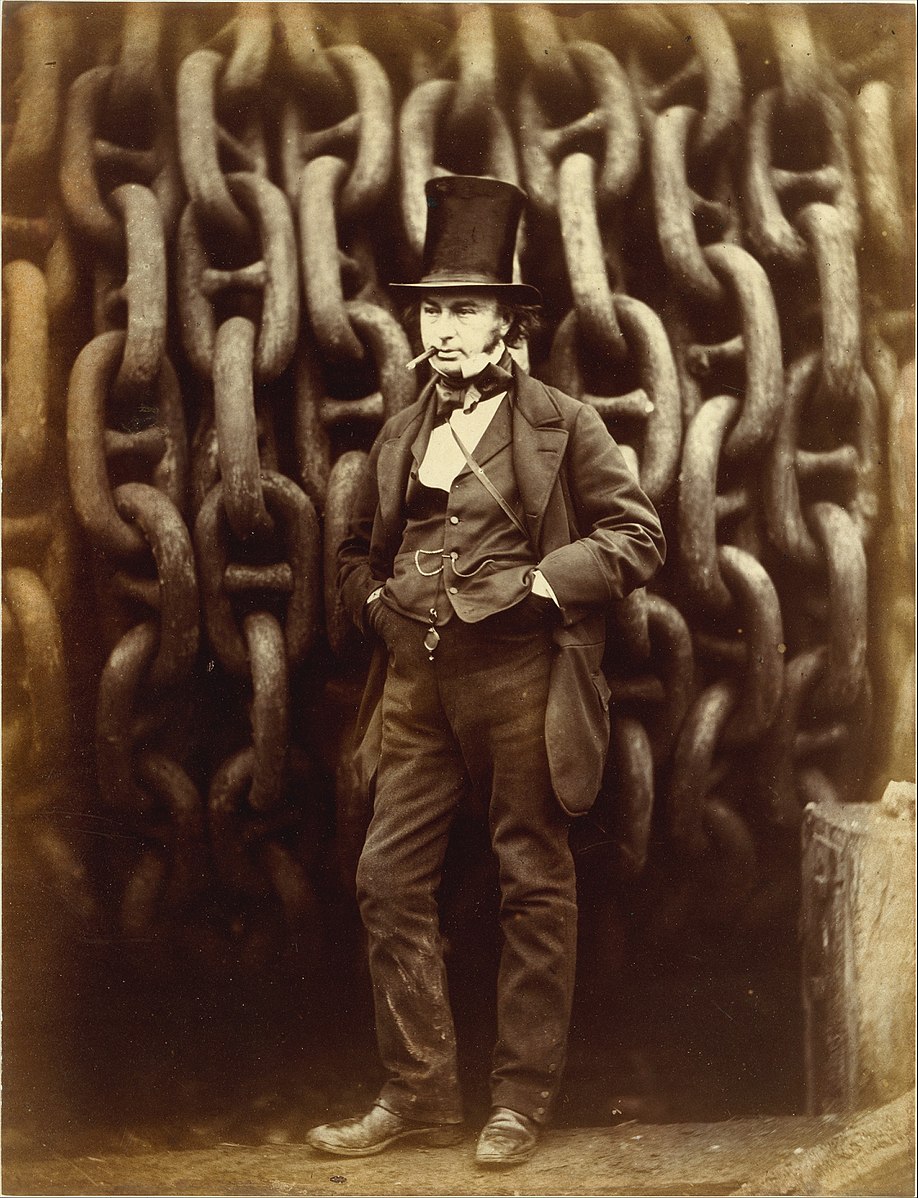
Isambard Kingdom Brunel; 9 April 1806 - 15 September 1859) was a British civil engineer and mechanical engineer who is considered "one of the most ingenious and prolific figures in engineering history", "one of the 19th-century engineering giants", and "one of the greatest figures of the Industrial Revolution, who changed the face of the English landscape with his groundbreaking designs and ingenious constructions". Brunel built dockyards, the Great Western Railway (GWR), a series of steamships including the first purpose-built transatlantic steamship, and numerous important bridges and tunnels. His designs revolutionised public transport and modern engineering.
Though Brunel's projects were not always successful, they often contained innovative solutions to long-standing engineering problems. During his career, Brunel achieved many engineering firsts, including assisting his father in the building of the first tunnel under a navigable river (the River Thames) and the development of the SS Great Britain, the first propeller-driven, ocean-going iron ship, which, when launched in 1843, was the largest ship ever built.
On the GWR, Brunel set standards for a well-built railway, using careful surveys to minimise gradients and curves. This necessitated expensive construction techniques, new bridges, new viaducts, and the two-mile-long (3.2 km) Box Tunnel. One controversial feature was the "broad gauge" of 7 ft 1⁄4 in (2,140 mm), instead of what was later to be known as "standard gauge" of 4 ft 8+1⁄2 in (1,435 mm). He astonished Britain by proposing to extend the GWR westward to North America by building steam-powered, iron-hulled ships. He designed and built three ships that revolutionised naval engineering: the SS Great Western (1838), the SS Great Britain (1843), and the SS Great Eastern (1859).
In 2002, Brunel was placed second in a BBC public poll to determine the "100 Greatest Britons". In 2006, the bicentenary of his birth, a major programme of events celebrated his life and work under the name Brunel 200.

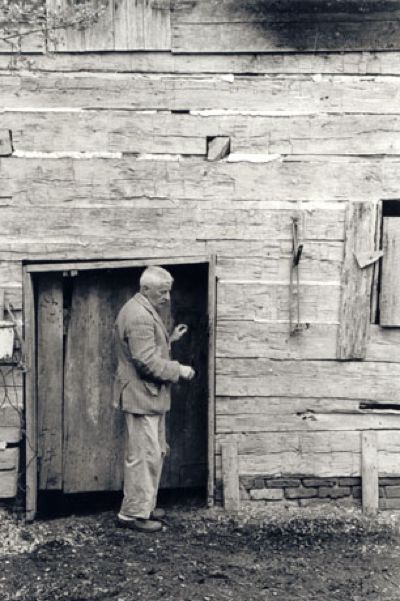
William Faulkner (1897-1962), who came from an old southern family, grew up in Oxford, Mississippi. He joined the Canadian, and later the British, Royal Air Force during the First World War, studied for a while at the University of Mississippi, and temporarily worked for a New York bookstore and a New Orleans newspaper. Except for some trips to Europe and Asia, and a few brief stays in Hollywood as a scriptwriter, he worked on his novels and short stories on a farm in Oxford.
In an attempt to create a saga of his own, Faulkner has invented a host of characters typical of the historical growth and subsequent decadence of the South. The human drama in Faulkner’s novels is then built on the model of the actual, historical drama extending over almost a century and a half Each story and each novel contributes to the construction of a whole, which is the imaginary Yoknapatawpha County and its inhabitants. Their theme is the decay of the old South, as represented by the Sartoris and Compson families, and the emergence of ruthless and brash newcomers, the Snopeses. Theme and technique – the distortion of time through the use of the inner monologue are fused particularly successfully in The Sound and the Fury (1929), the downfall of the Compson family seen through the minds of several characters. The novel Sanctuary (1931) is about the degeneration of Temple Drake, a young girl from a distinguished southern family. Its sequel, Requiem For A Nun (1951), written partly as a drama, centered on the courtroom trial of a Negro woman who had once been a party to Temple Drake’s debauchery. In Light in August (1932), prejudice is shown to be most destructive when it is internalized, as in Joe Christmas, who believes, though there is no proof of it, that one of his parents was a Negro. The theme of racial prejudice is brought up again in Absalom, Absalom! (1936), in which a young man is rejected by his father and brother because of his mixed blood. Faulkner’s most outspoken moral evaluation of the relationship and the problems between Negroes and whites is to be found in Intruder In the Dust (1948).
In 1940, Faulkner published the first volume of the Snopes trilogy, The Hamlet, to be followed by two volumes, The Town (1957) and The Mansion (1959), all of them tracing the rise of the insidious Snopes family to positions of power and wealth in the community. The reivers, his last – and most humorous – work, with great many similarities to Mark Twain’s Huckleberry Finn, appeared in 1962, the year of Faulkner’s death.
Sloth Factoid 2: Sloths have large multichambered stomachs and an ability to tolerate strong chemicals from the foliage they eat. The leafy food is digested slowly; a fermenting meal may take up to a week to process. The stomach is constantly filled, its contents making up about 30 percent of the sloth’s weight. Sloths descend to the ground at approximately six-day intervals to urinate and defecate. (from Encyclopedia Britanica)

STATELY, PLUMP BUCK MULLIGAN CAME FROM THE STAIRHEAD, bearing a bowl of
lather on which a mirror and a razor lay crossed. A yellow dressinggown,
ungirdled, was sustained gently behind him by the mild morning air. He
held the bowl aloft and intoned:

--INTROIBO AD ALTARE DEI.

Halted, he peered down the dark winding stairs and called out coarsely:

--Come up, Kinch! Come up, you fearful jesuit!

Solemnly he came forward and mounted the round gunrest. He faced about
and blessed gravely thrice the tower, the surrounding land and the
awaking mountains. Then, catching sight of Stephen Dedalus, he bent
towards him and made rapid crosses in the air, gurgling in his throat and
shaking his head. Stephen Dedalus, displeased and sleepy, leaned his arms
on the top of the staircase and looked coldly at the shaking gurgling
face that blessed him, equine in its length, and at the light untonsured
hair, grained and hued like pale oak.

Buck Mulligan peeped an instant under the mirror and then covered
the bowl smartly.

--Back to barracks! he said sternly.


Revolver blast with burning powder between frame and cylinder
Sloth Factoid 1: Sloths - the sluggish tree-dwellers of Central and South America - spend their lives in the tropical rain forests. They move through the canopy at a rate of about 40 yards per day, munching on leaves, twigs and buds. Sloths have an exceptionally low metabolic rate and spend 15 to 20 hours per day sleeping. And surprisingly enough, the long-armed animals are excellent swimmers. They occasionally drop from their treetop perches into water for a paddle. (from Encyclopedia Britanica)

FIRST WITCH.
When shall we three meet again?
In thunder, lightning, or in rain?

SECOND WITCH.
When the hurlyburly's done,
When the battle's lost and won.

THIRD WITCH.
That will be ere the set of sun.

FIRST WITCH.
Where the place?

SECOND WITCH.
Upon the heath.

THIRD WITCH.
There to meet with Macbeth.

FIRST WITCH.
I come, Graymalkin!

SECOND WITCH.
Paddock calls.

THIRD WITCH.
Anon.

ALL.
Fair is foul, and foul is fair:
Hover through the fog and filthy air.
Maya Deren, (born April 29, 1917, Kiev, Ukraine - died Oct. 13, 1961, New York, N.Y., U.S.), influential director and performer who is often called the mother of American avant-garde filmmaking. Her films are not only poetic but instructive, offering insight into the human body and pysche and demonstrating the potential of film to explore these subjects. (from Encyclopedia Britanica)